TRADITIONS
OUTDOOR CLASSROOMS
 

Where the Trails Become the Classroom

BY MARISA DEMERS


At Potomac, the woods are not a backdrop. They are part of the classroom experience.
 

On a 90-acre campus shaped by trails, streams, ponds, and outdoor gathering spaces, students learn early that education at Potomac does not stop at the classroom door.

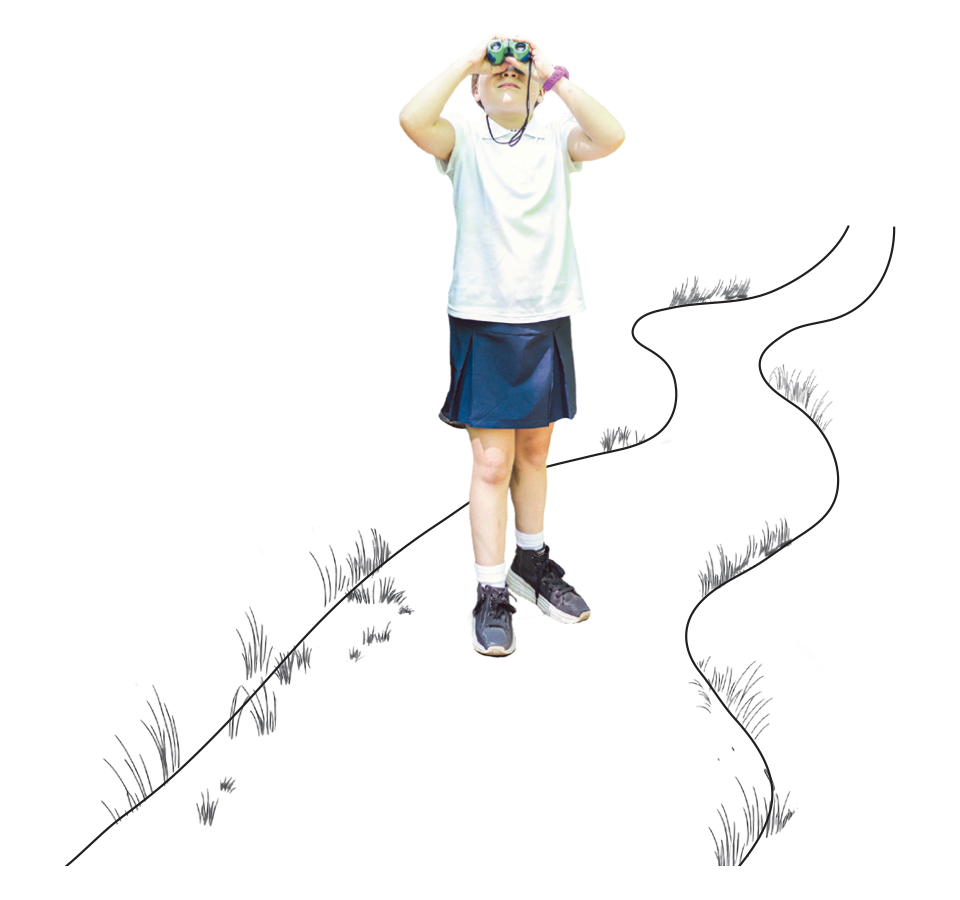
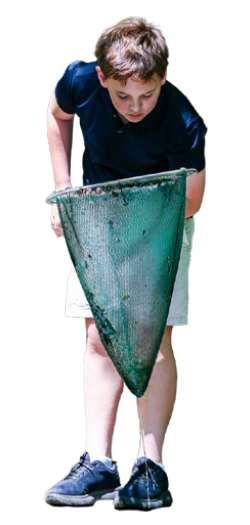
In the Lower School, that idea is quite literal—every classroom has a door that opens directly outdoors, making nature an immediate extension of the learning environment. Students head outside with rain boots, binoculars, and nets in hand, ready to observe, collect, and ask questions. Middle School students scramble over rocks, build forts, and make the woods part of recess. In the Intermediate School, seventh graders adopt a tree and track its changes through the seasons using photographs, soil tests, and data collection. Upper School students sketch, paint, read, and reflect outdoors.

 
Trail Search
Across all four divisions, the natural landscape is not an occasional enrichment activity. It is woven into daily life and into the habits of attention, curiosity, and stewardship that Potomac hopes to cultivate.
 
“For a school to be so close to a city, which already has so much to offer, and also be near beautiful lands with two ponds and a stream, is special,” says Mary Cahill, science teacher and academic coordinator in the Intermediate School. Mary has spent decades helping students see the campus not simply as scenery, but as a place to investigate and understand.
 
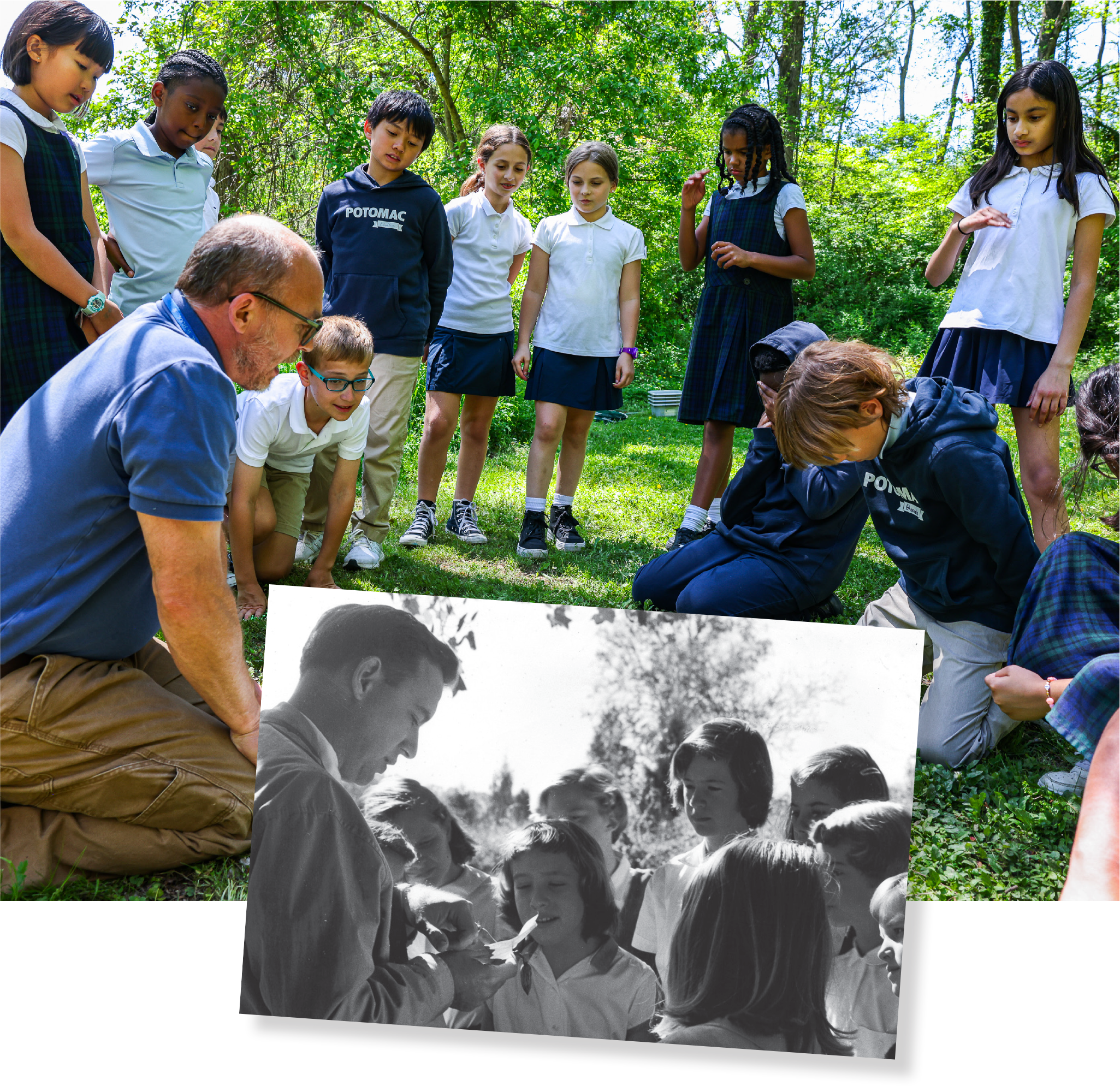
At Potomac, students are invited to look closely, whether that means tracking a tree over time or noticing how the woods change from season to season. That vision has deep roots. When Potomac moved from Washington, DC, to its McLean campus in 1951, Headmistress Carol Preston recognized that the land itself could shape the student experience. In the 1950s, environmental science teacher Duryea “Dur” Morton established trails through the woods and around the ponds and streams, creating a tradition of outdoor education that continues today.
 
Over time, students and faculty have helped build and care for the campus, from planting trees and ground cover to improving trails, bridges, and outdoor classrooms. What began as a practical use of the school’s natural surroundings became something more enduring: a philosophy that serious learning can happen in direct contact with the natural world.
 
That legacy remains visible across campus. Potomac has multiple outdoor classrooms, and the Morton Deck, built in 1998 in honor of Dur Morton, has served for decades as a place for classes, reading, conversation, and gatherings around the fire pit. Annual traditions such as Fall Frolics and May Day draw the community outdoors as well, reinforcing the connection between the school’s culture and its landscape. At a moment when so much of childhood is mediated by screens and schedules, Potomac’s woods offer something increasingly rare: the chance to notice, to learn through direct experience, and to feel a lasting connection to the natural world.
 
For generations of students, the trails have been more than a beloved feature of campus. They have been a place to test ideas, build confidence, and develop the kind of attentiveness that lasts well beyond school.

“For a school to be so close to a city, which already has so much to offer, and also be near beautiful lands with two ponds and a stream, is special,” says Mary Cahill.

Then and Now

THEN AND NOW

In 1958, science teacher Dur Morton helped shape Potomac’s natural science curriculum and, with students, built the nature trails that still wind through our campus woodlands. Today, Steve Wolfe carries that spirit forward through outdoor learning.

This article appeared in the Spring 2026 issue of The Term.
 

Read this issue

Nature’s Best Photography co-founder Steve Freligh ’71 on the deep impact of the living world
Leigh Ernst Friestedt ’85 is using her on-field intuition to challenge a multibillion-dollar NCAA settlement— and defend the future of Title IX
Josh Stinchcomp ’91 Believes Trust and Innovation Are Helping Journalism Meet the Moment.
Leading Roll: Striking it Big on Your Next Venture

What makes one startup soar while another stalls? Two veteran investors, Damien Petty ’93 and Stefanie Thomas Martin ’03, reveal the traits in a founder who—rather than a startup’s product, profit, and market fit—can make or break a venture.

Read More

Moving Pictures

Davis Guggenheim '79 first broke through with his 2006 film An Inconvenient Truth, which won the Academy Award for Best Documentary Feature, and he has since directed acclaimed works such ...

Read More

Feature: Family Style

Michael Farah ’99 left Wall Street to build a Brooklyn restaurant around the flavors of his mother’s table.

Read More